
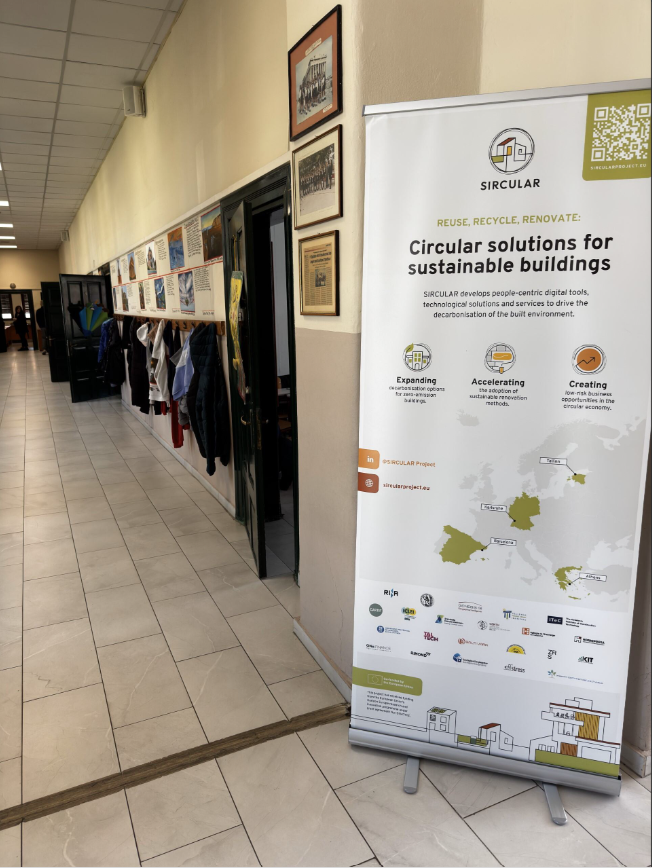
As part of our SIRCULAR activities, the HPHI team recently visited the 5th Elementary School of Trikala, a school building that has been successfully retrofitted to the Passive House standard. The visit offered a powerful, real-life demonstration of how high-performance buildings can directly improve the daily experience of students and teachers.
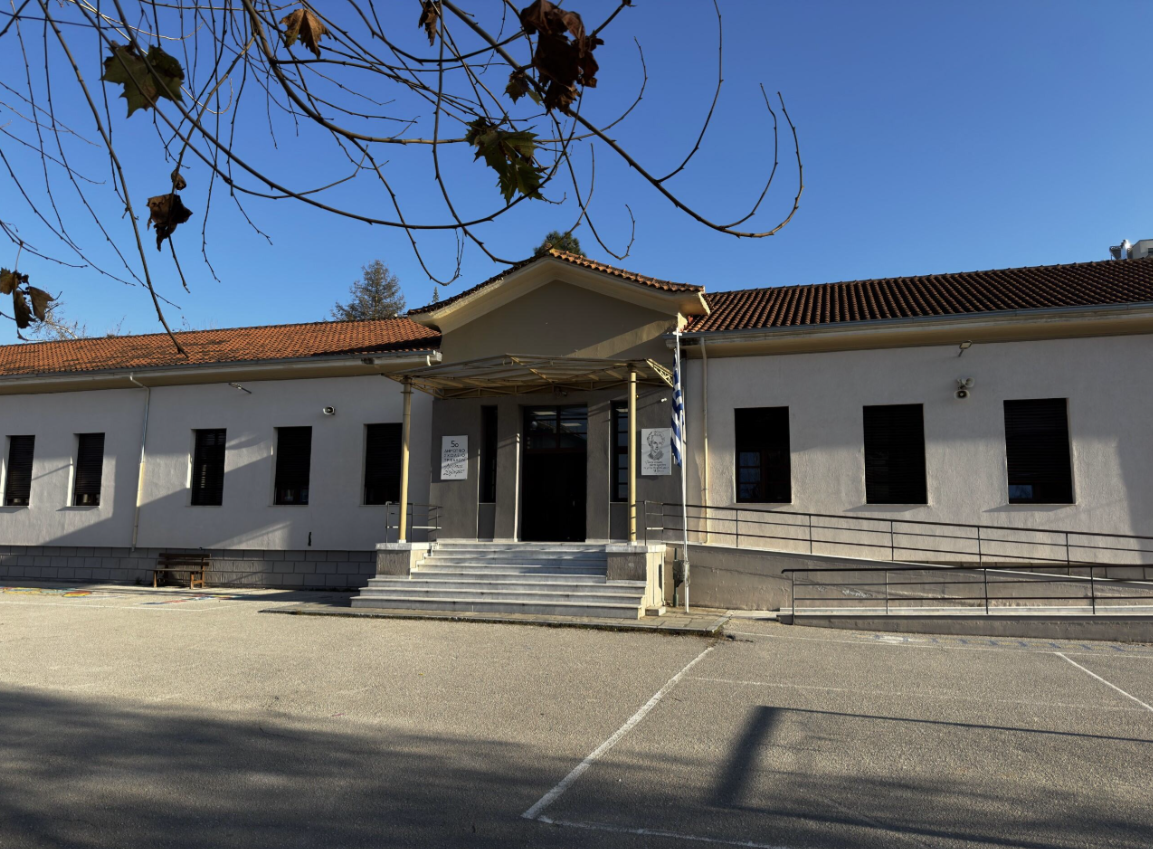
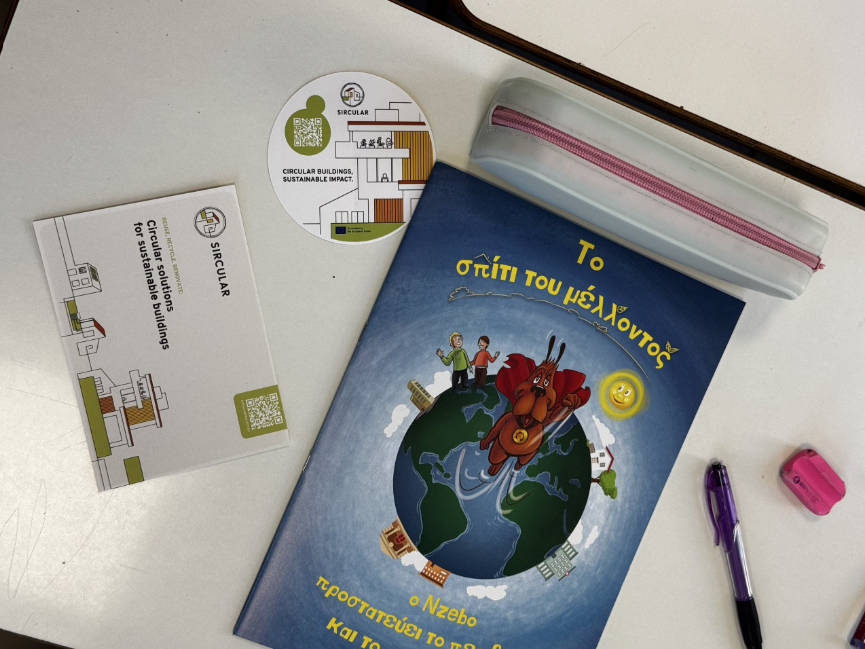
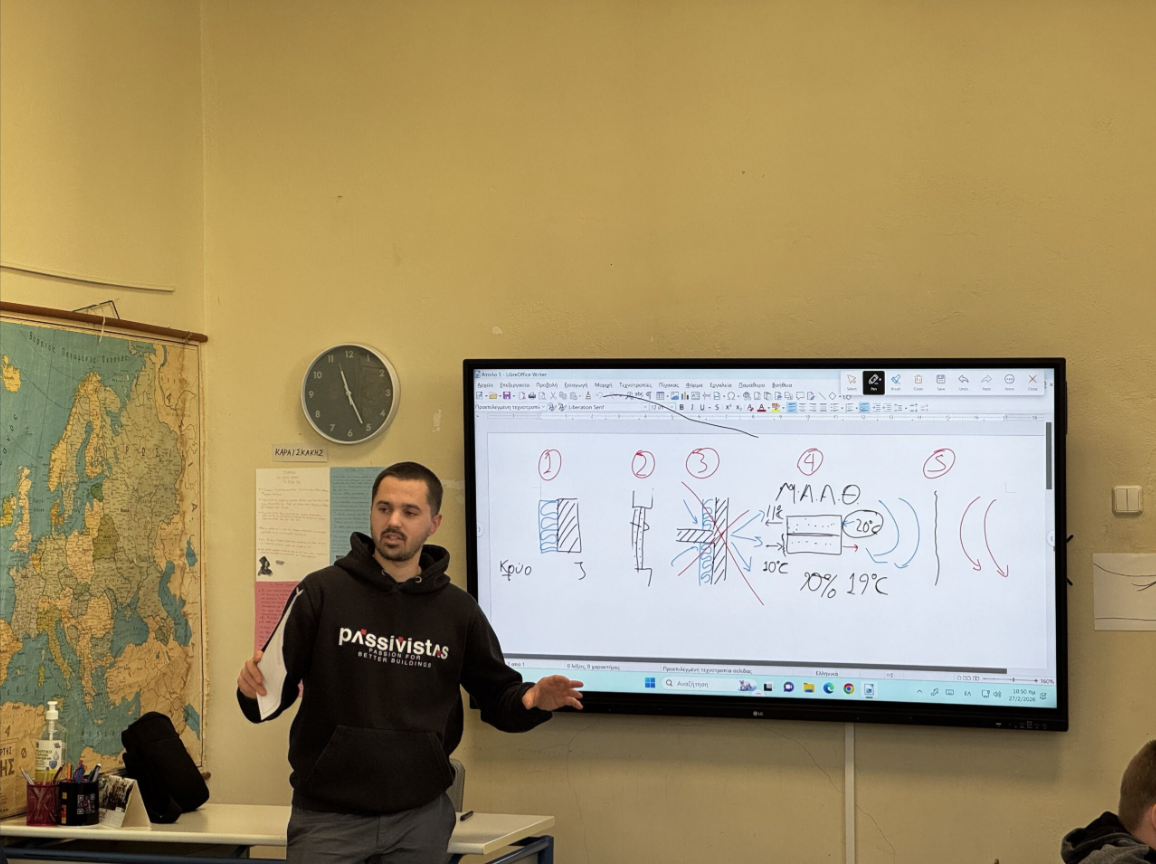
From the moment we entered the classrooms, the difference was evident. Both students and educators highlighted the highly comfortable indoor temperatures, while the outside temperature was 8°C.
This visit formed part of our Work Package 5 activities, where we are systematically assessing indoor environmental quality through structured thermal comfort questionnaires. In Trikala, we conducted surveys similar to those implemented last year at our Greek demo pilot, the Lela Karagianni School in Athens. By comparing the responses from both schools, we aim to generate measurable insights into how appropriate thermal conditions and continuous clean air supply influence comfort, wellbeing, and learning performance in classrooms.
These comparative results will provide valuable evidence for policymakers, municipalities, and school authorities. Beyond reducing energy consumption and carbon emissions, properly designed and retrofitted school buildings support healthier, more resilient learning environments. Clean air, stable temperatures, and acoustic comfort are not luxuries; they are prerequisites for educational equity and long-term sustainability.
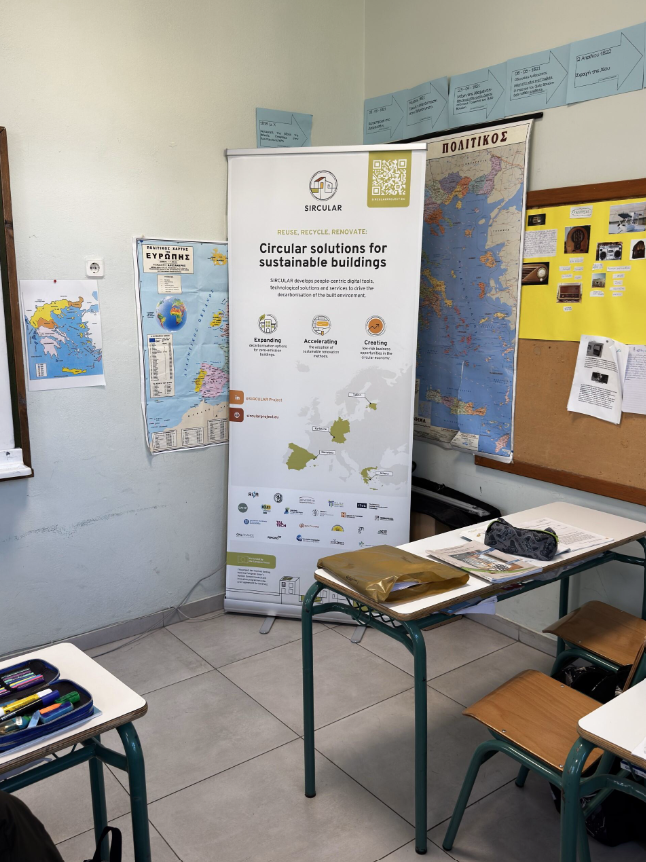
Our visit reaffirmed a simple but powerful message: when we invest in building performance, we invest in people. The data we are gathering through SIRCULAR will help strengthen the case for scaling such solutions across Europe, ensuring that every classroom can offer the conditions students truly deserve.
This article was written by Maria Dimitriou and Mariza Gkadri, HPHI